2026

NeuroVolve: Evolving personalized visual stimuli toward user-defined brain response targets

Haomiao Chen, Keith W Jamison, Daniel Chong, Yunrui Zhang, Mert R. Sabuncu, Amy Kuceyeski

Arxiv preprint , 2026

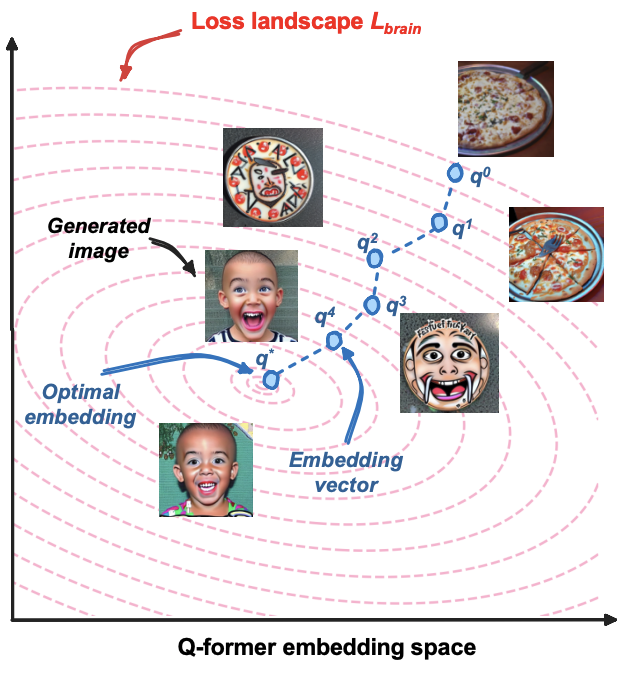
A central question in neuroscience is what visual features drive brain responses across regions. Classic approaches rely on handcrafted stimuli to test specific hypotheses, limiting discovery to features defined before experiments. Here we introduce NeuroVolve, a data-driven generative framework for synthesizing images that achieve flexible, user-defined patterns of brain activation in individuals. NeuroVolve recovers established selectivity across visual cortical regions and, paired with subject-specific brain encoding models, generates personalized stimuli reflecting individual differences in neural preference.
NeuroVolve: Evolving personalized visual stimuli toward user-defined brain response targets

Haomiao Chen, Keith W Jamison, Daniel Chong, Yunrui Zhang, Mert R. Sabuncu, Amy Kuceyeski

Arxiv preprint , 2026

A central question in neuroscience is what visual features drive brain responses across regions. Classic approaches rely on handcrafted stimuli to test specific hypotheses, limiting discovery to features defined before experiments. Here we introduce NeuroVolve, a data-driven generative framework for synthesizing images that achieve flexible, user-defined patterns of brain activation in individuals. NeuroVolve recovers established selectivity across visual cortical regions and, paired with subject-specific brain encoding models, generates personalized stimuli reflecting individual differences in neural preference.

A view-engage-predict framework for enhancing brain-behavior mapping with naturalistic movie-watching fMRI

Yunrui Zhang, Emily S. Finn, Mert R. Sabuncu, Amy Kuceyeski

Nature Communications Biology , 2026

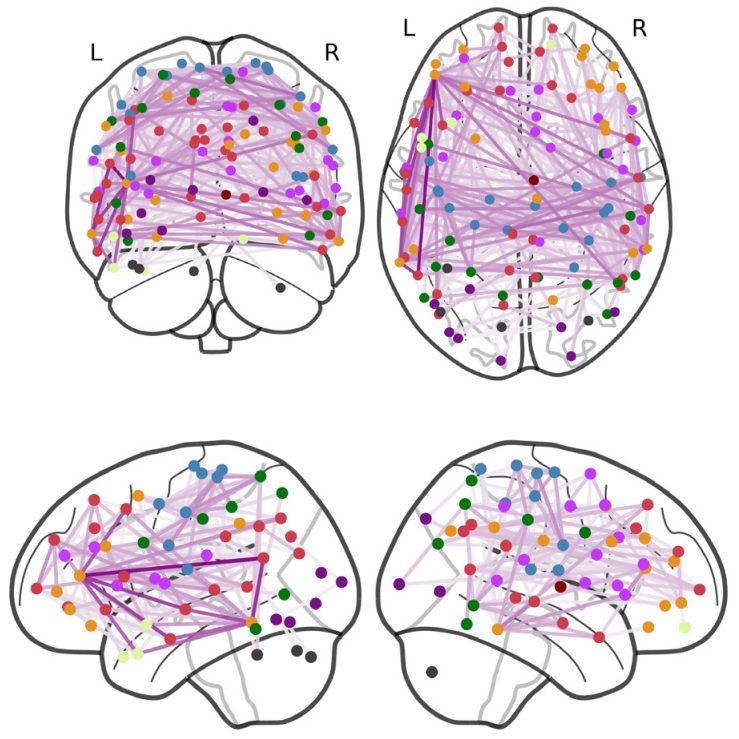
How does the human brain respond while watching movies, and what can this reveal about individual traits? In this work, we show that certain movie clips can predict cognitive scores and sex from fMRI functional connectivity more effectively than five times as much resting-state data. For cognition prediction, a movie clip’s predictive power is strongly linked to how well it synchronizes brain activity across people and to the amount of social and human-related content. These effects were not observed for sex prediction.

2024
A (k,t)-RAKI Method for Interpolating Sparse Data in Accelerated MRSI Acquisitions

Yunrui Zhang, Ruiyang Zhao, Zepeng Wang

International Society of Magnetic Resonance in Medicine (ISMRM) 2024 Power Pitch

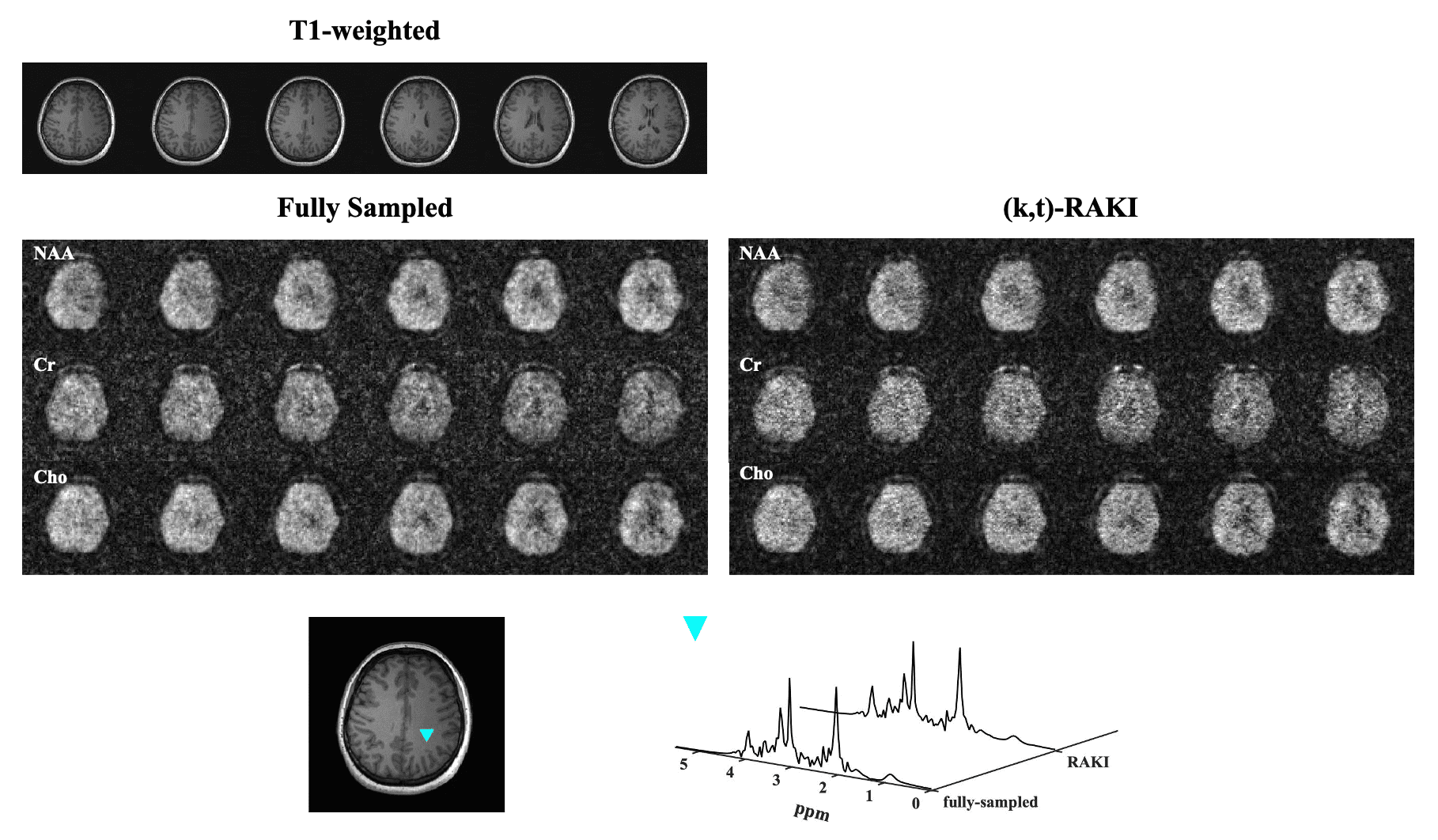
In this work, we adapted and extended the self-supervised learning-based RAKI method by incorporating the FID dimension into a 3D, complex-valued convolutional network, for MRSI reconstruction. We improved the design by training a single network to handle multi-coil data simultaneously instead of the coil-by-coil interpolation in the original RAKI method. We demonstrate reduced aliasing by the proposed method and consequently improved spatiospectral processing results, using in vivo 1H-MRSI data.