Yunrui Zhang 张芸睿
 ECE Ph.D. @ Cornell University (2029, expected)
 B.Eng., Tsinghua University (2024)
Hi! I am Yunrui Zhang, a third-year Electrical and Computer Engineering Ph.D. student at Cornell University advised by Prof. Amy Kuceyeski and Prof. Mert Sabuncu. I am currently a research intern at Siemens Healthineers, where I work on multimodal AI for medical imaging.
I received my Bachelor's degree from Tsinghua University, where I was very fortunate to be advised by Prof. Gangtie Zheng, Prof. Mingguo Zhao and Prof. Rebing Wu.
My research interests lie broadly at the intersection of AI/ML and healthcare, with a focus on functional magnetic resonance imaging (fMRI) 🧠, brain-behavior mapping, and surgical robotics 🦾.
During my leisure time, I enjoy classic Chinese literature & poetry 📜, fiction 📖, piano 🎹 and musicals 🎶.

Action required
Problem: The current root path of this site is "baseurl ("_config.yml.
Solution: Please set the
baseurl in _config.yml to "Education
-
Cornell University
Ph.D. in Electrical and Computer Engineering 2024 - Present
-
Tsinghua University
B.Eng. in Automation Engineering 2020 - 2024
Honors & Awards
- Irwin Jacobs Fellowship, Cornell University 2024
- Tsinghua Innovation Award of Science and Technology 2023, 2022
- First Prize in Beijing Challenge Cup 2023
- Tsinghua Award of Outstanding Public Service 2022
Experience
-

Siemens Healthineers
AI Research Intern May. 2026 - Present
-

University of Illinois at Urbana-Champaign
Summer Research Intern Jul. 2023 - Sep. 2023
News
Selected Publications (view all )
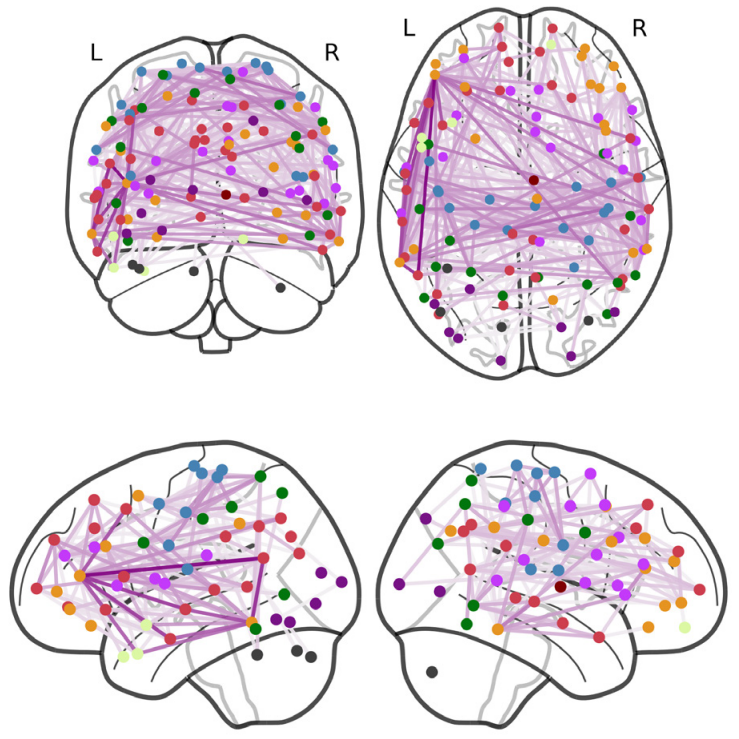
A view-engage-predict framework for enhancing brain-behavior mapping with naturalistic movie-watching fMRI
Yunrui Zhang, Emily S. Finn, Mert R. Sabuncu, Amy Kuceyeski
Nature Communications Biology , 2026
How does the human brain respond while watching movies, and what can this reveal about individual traits? In this work, we show that certain movie clips can predict cognitive scores and sex from fMRI functional connectivity more effectively than five times as much resting-state data. For cognition prediction, a movie clip’s predictive power is strongly linked to how well it synchronizes brain activity across people and to the amount of social and human-related content. These effects were not observed for sex prediction.
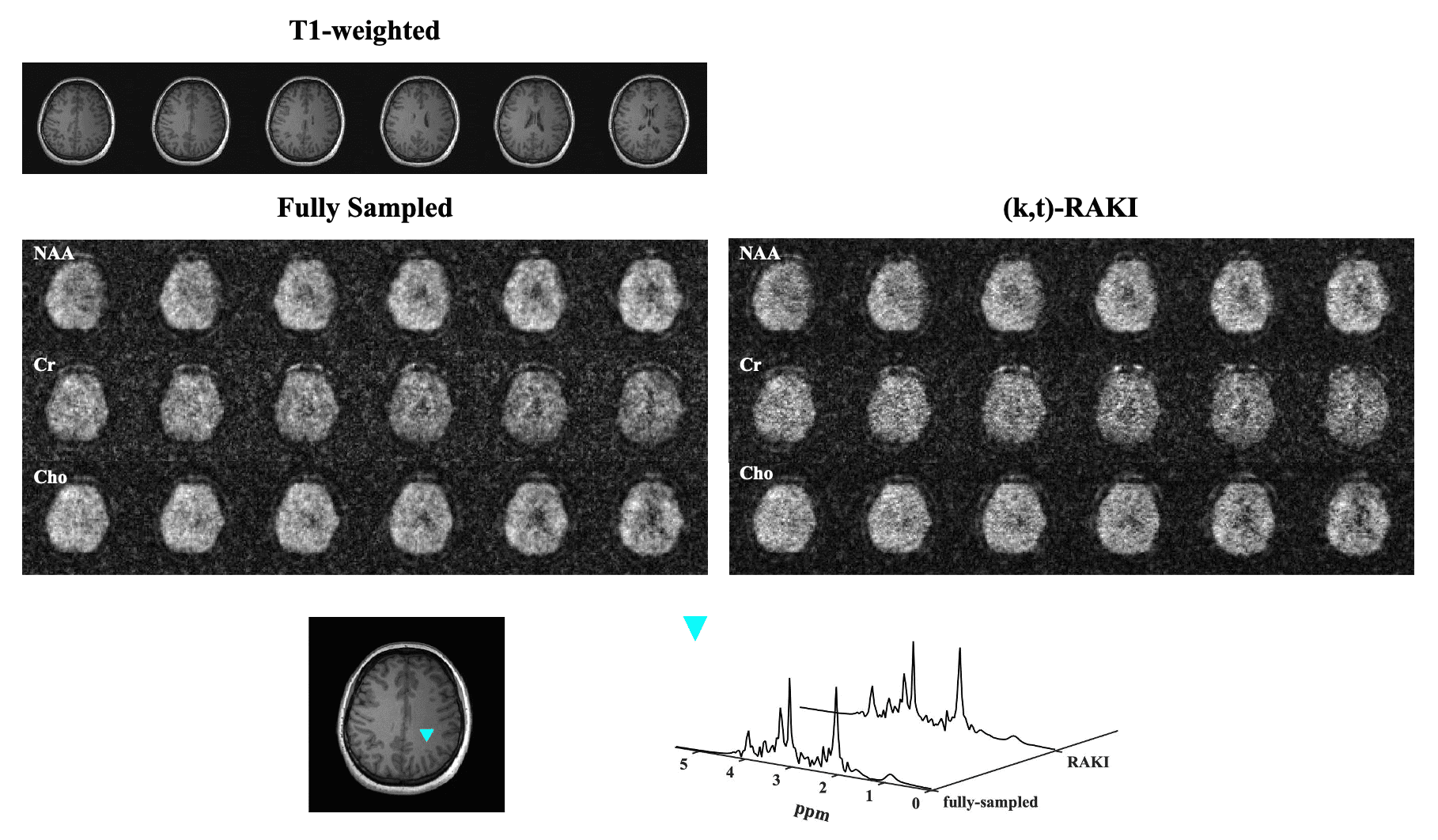
A (k,t)-RAKI Method for Interpolating Sparse Data in Accelerated MRSI Acquisitions
Yunrui Zhang, Ruiyang Zhao, Zepeng Wang
International Society of Magnetic Resonance in Medicine (ISMRM) 2024 Power Pitch
In this work, we adapted and extended the self-supervised learning-based RAKI method by incorporating the FID dimension into a 3D, complex-valued convolutional network, for MRSI reconstruction. We improved the design by training a single network to handle multi-coil data simultaneously instead of the coil-by-coil interpolation in the original RAKI method. We demonstrate reduced aliasing by the proposed method and consequently improved spatiospectral processing results, using in vivo 1H-MRSI data.